Every build below is real and running. The workflow screenshots come from my own n8n. The Trade Desk uses demo data, so my real results stay private. Where something is a reference build and not client work, it says so.
Most businesses lose money in the same few places: leads that go cold, work done twice, and problems nobody hears about until it is too late. Each system below plugs one of those leaks. I built them for my own business first, so I know they hold up. Now I build them for agencies and founders, on whatever stack fits: n8n, Cloudflare Workers, the Notion API, Telegram bots, OpenAI models and the tools you already use.
OverviewP&L calendarPerformance metrics
30 second tour (demo data)Logging a trade from the form
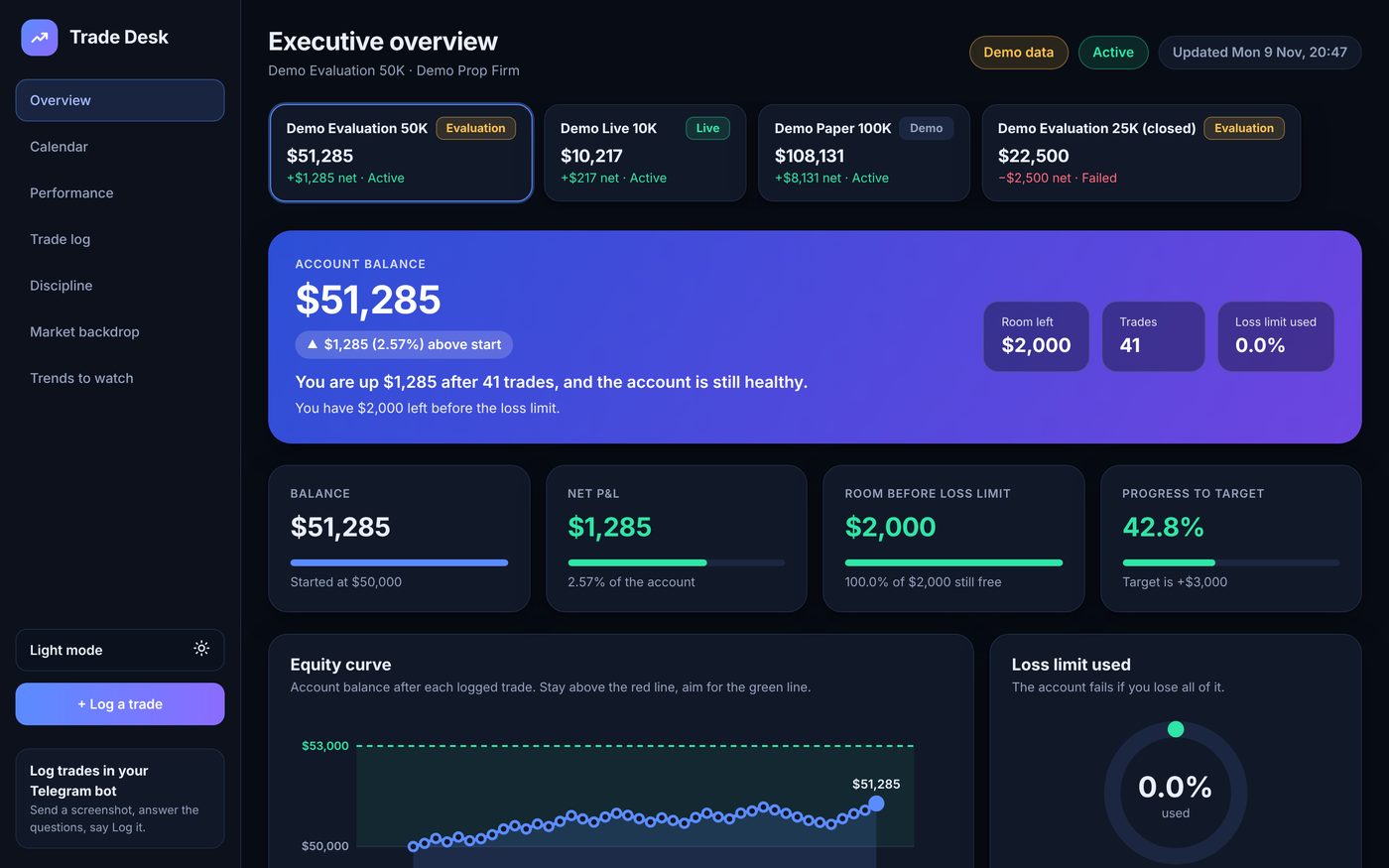
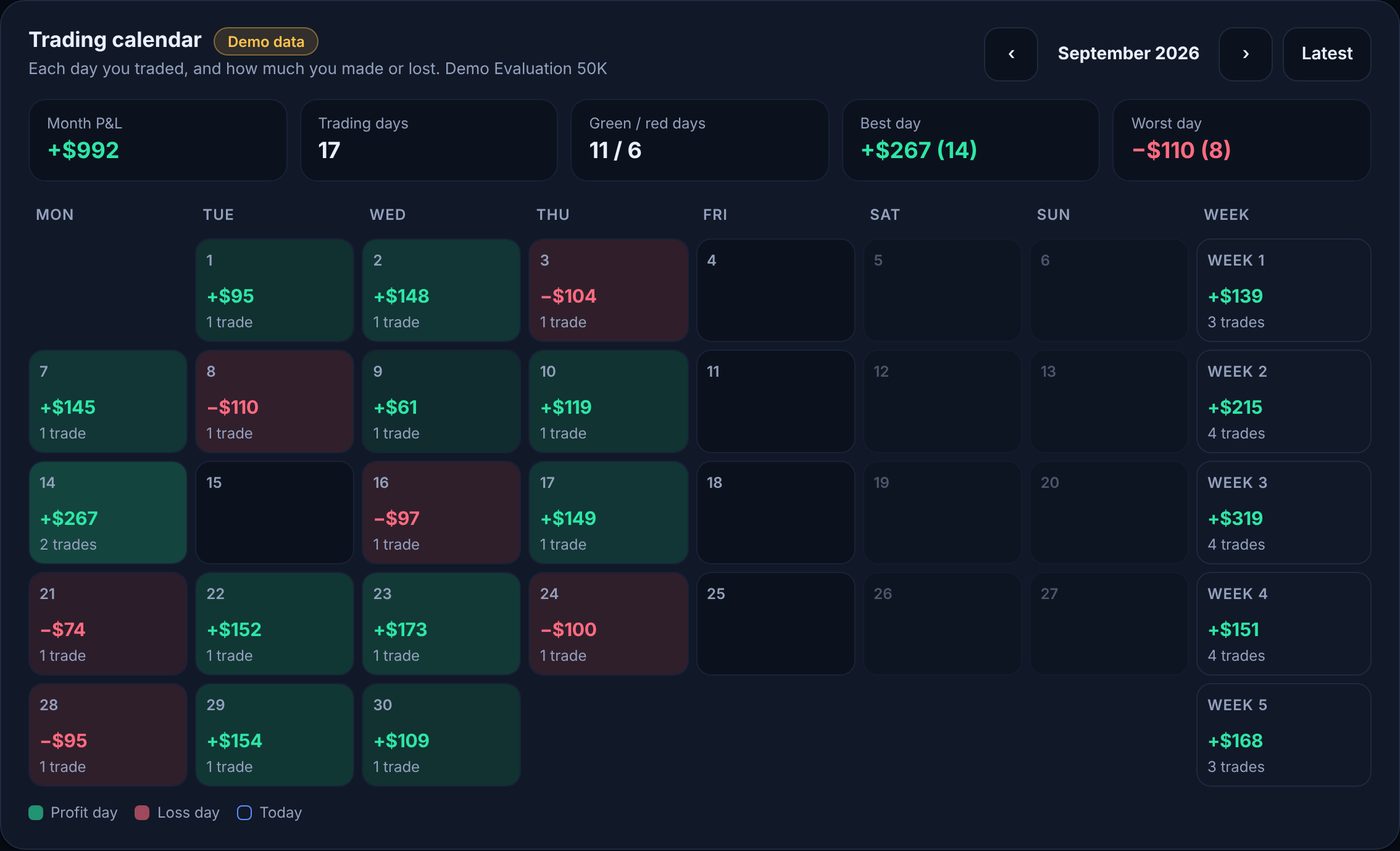
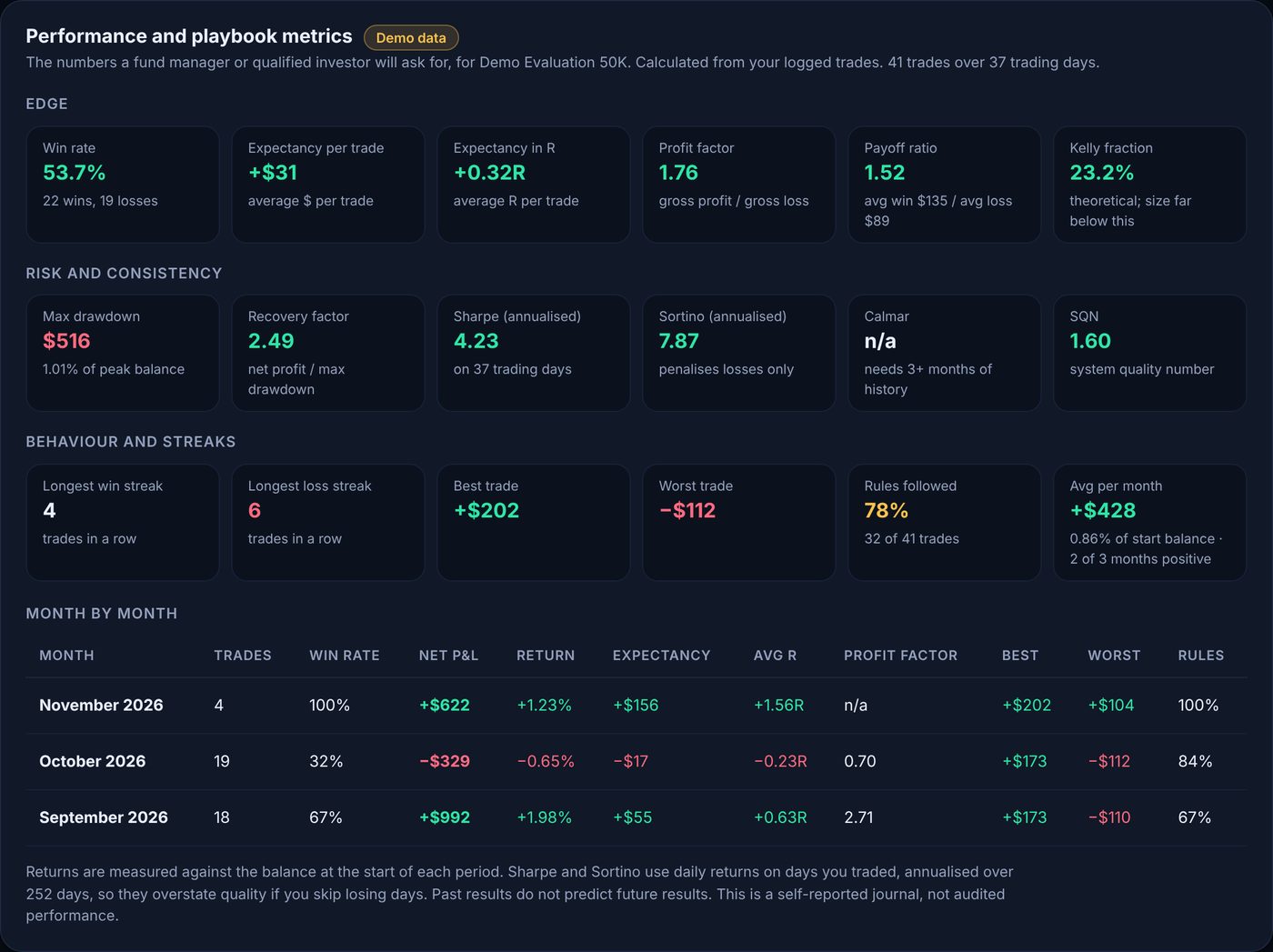
Trade Desk: a private dashboard that turns a spreadsheet into answers
The problem: A trader's results sit in a spreadsheet, and the numbers that matter are slow to find and easy to get wrong. Think daily profit and loss, drawdown (how far an account has fallen from its peak) and expectancy (what an average trade earns).
What I built: A private dashboard with a prop firm style profit and loss calendar and the performance numbers a professional investor would ask for. I can log a trade from the dashboard or a Telegram bot. It works for any account: demo, evaluation, funded, live or failed.
Under the hood: n8n reads the journal in Google Sheets. A publish script recalculates every figure and cross checks it against the sheet, and a failed check blocks the update. The page sits behind a Cloudflare Access login. The logging endpoint verifies that login, limits request rates, blocks duplicates and refuses closed accounts. Screenshots and videos use demo data, not my real results.
LinkedIn Autopilot: a posting habit that survives your busiest week
The problem: Posting on LinkedIn works until you get busy. Then the habit breaks, and the momentum goes with it.
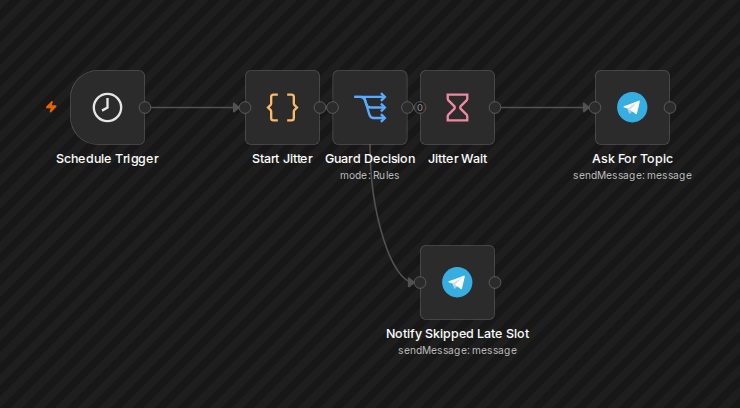
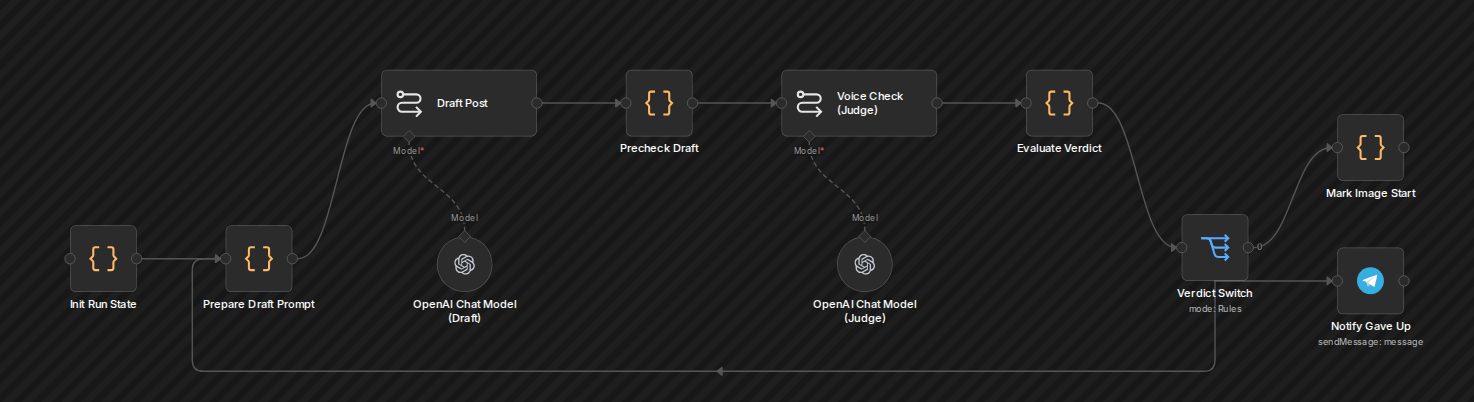
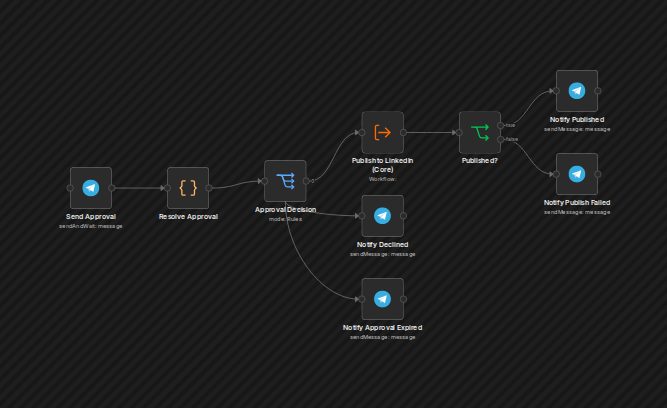
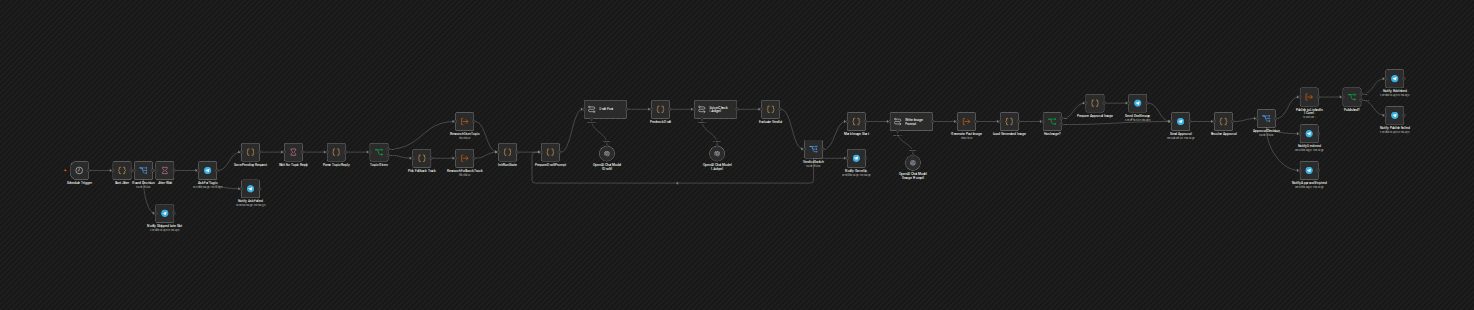
What I built: A system that prepares a post for me twice a day, Monday to Saturday. It asks me for a topic, researches it and writes the draft in my voice. Then it checks that draft against my voice automatically, and the version that passes lands in my Telegram for a yes or no.
Under the hood: An n8n workflow with an AI voice checker that retries up to 5 times per slot. A late slot guard skips any post that fires more than 45 minutes late, so a stale post never goes out at the wrong hour. Nothing reaches LinkedIn until I tap Approve.
LinkedIn AI Posting Agent: turn a passing thought into a post
The problem: Good ideas show up in the middle of the day and are gone by the time you sit down to write.
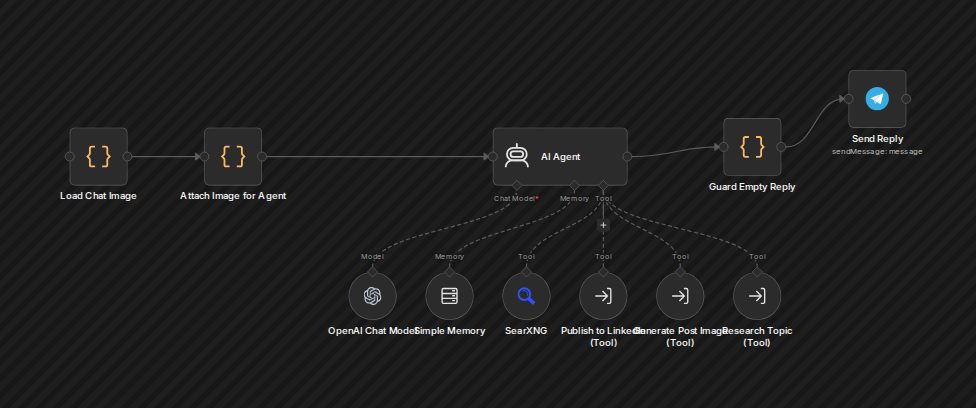
What I built: A Telegram bot. I send it a thought, a photo or a voice note. It researches the idea, drafts a post in my voice and revises it until I am happy.
Under the hood: It cannot publish by accident. Posting needs a final "this cannot be undone" confirmation in Telegram.
The problem: Finding something worth saying can eat an hour of reading before you write a word.
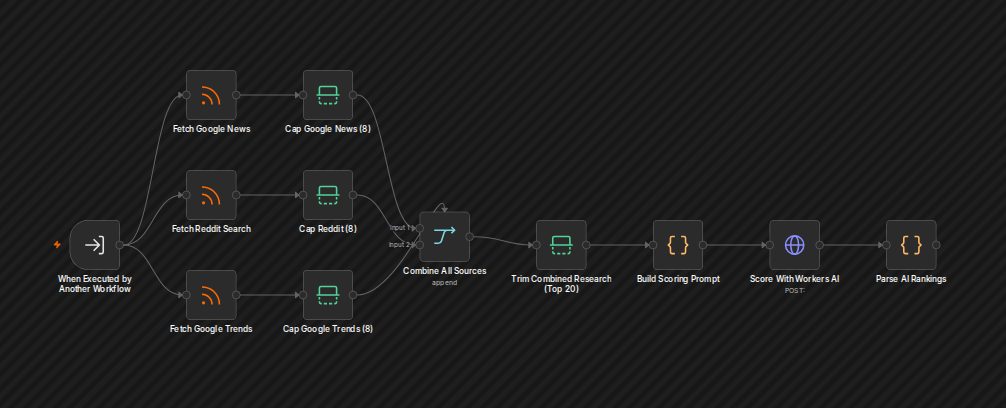
What I built: It pulls fresh news and search trends on a topic, has AI score every item, and hands the writing step only the best sources, with real names and links.
Under the hood: Google News and Google Trends go in, up to 20 items get scored and the top 6 are kept. Any source without a real publication name is dropped, so nothing is credited to "Markets" or a bare web address.
Website enquiries that file themselves
The problem: An enquiry that sits in an inbox goes cold. Copying it into a CRM by hand means some never make it.
What I built: When someone fills in the intro call form on this site, a row is created in my Notion pipeline, scored and routed to its next step, and I get a Telegram ping. It runs around the clock, off my own machine.
Under the hood: The form posts to a Cloudflare Worker, which checks for spam and maps the fields. Every enquiry lands with Source set to Website and Stage set to New. A honeypot, a hidden field only bots fill in, turns spam away before it reaches the pipeline.
Failure alerts: know the moment something breaks
The problem: Automations fail quietly. You find out a week later, after the damage is done.
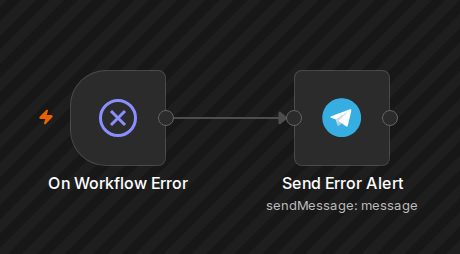
What I built: A shared safety net. When any run fails, I get a Telegram message straight away.
Under the hood: One shared n8n error workflow. The alert names the workflow, the exact step, the error and the run ID, so I can fix it without hunting. It is wired into the LinkedIn Autopilot.
Blog production with a human sign off
The problem: Publishing every week means research, drafting, formatting and checks, and an AI draft can go live without anyone reading it.
What I built: A weekly run that researches keywords, drafts the article, formats it to the site template and runs a full build of the site.
Under the hood: Nothing publishes until I approve the article by name. The gate exists because an early version published unreviewed, so I fixed it by design, not by promising to be careful.
Reputation and Feedback Intelligence Engine Reference build
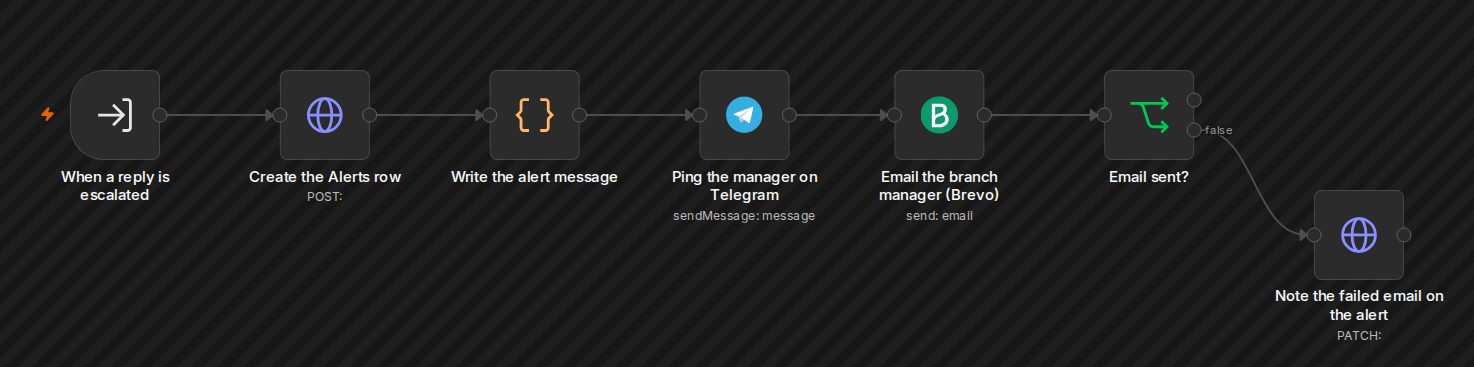
A complete system I built from start to finish in n8n and tested live, ready to deploy for an agency's multi location clients.
The problem: A business with many locations hears about an unhappy customer too late, and replies come back slow and inconsistent.
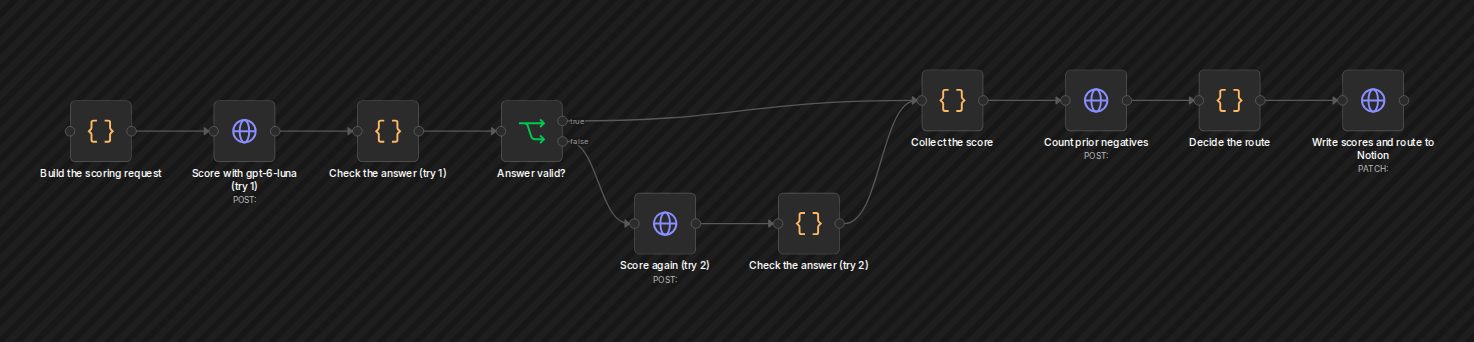
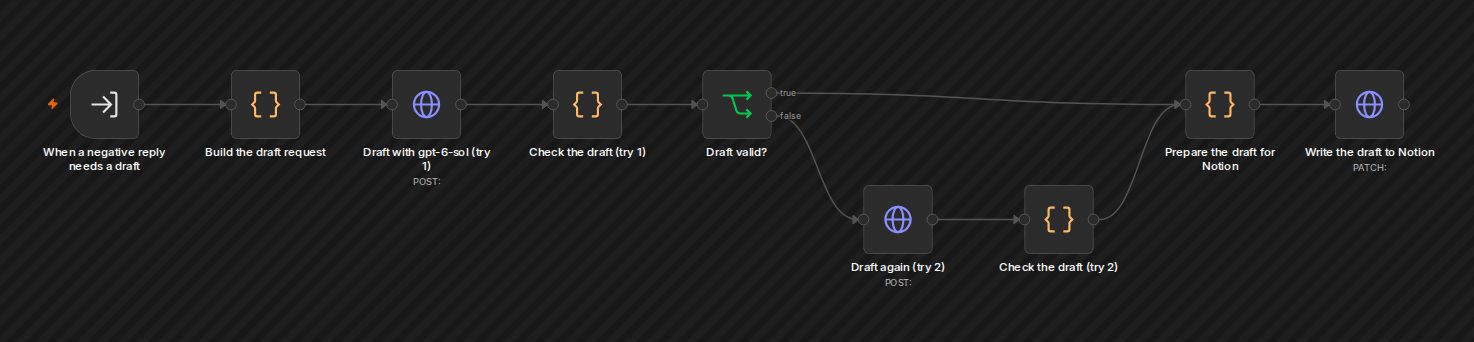
What I built: Every customer reply is read by AI and scored for mood, seriousness and how sure the AI is. Fixed rules then send it down one of four paths: ready to post, private follow up, escalate, or hand to a human when the AI is not confident. Unhappy customers get a personal draft reply for staff to approve.
Under the hood: Escalations alert the branch manager by email and Telegram. A draft is never sent to a customer automatically. It passed a live end to end test, 5 out of 5.
Before I built automations, I was a growth marketer. That is why my systems aim at pipeline and delivery, not automation for its own sake.
0
views, Great Grace TV
0
subscribers, Great Grace TV
0
impressions, Great Grace TV
0
raise supported, Ayoken
Great Grace TV: from 3,000 subscribers to over 10 million views#
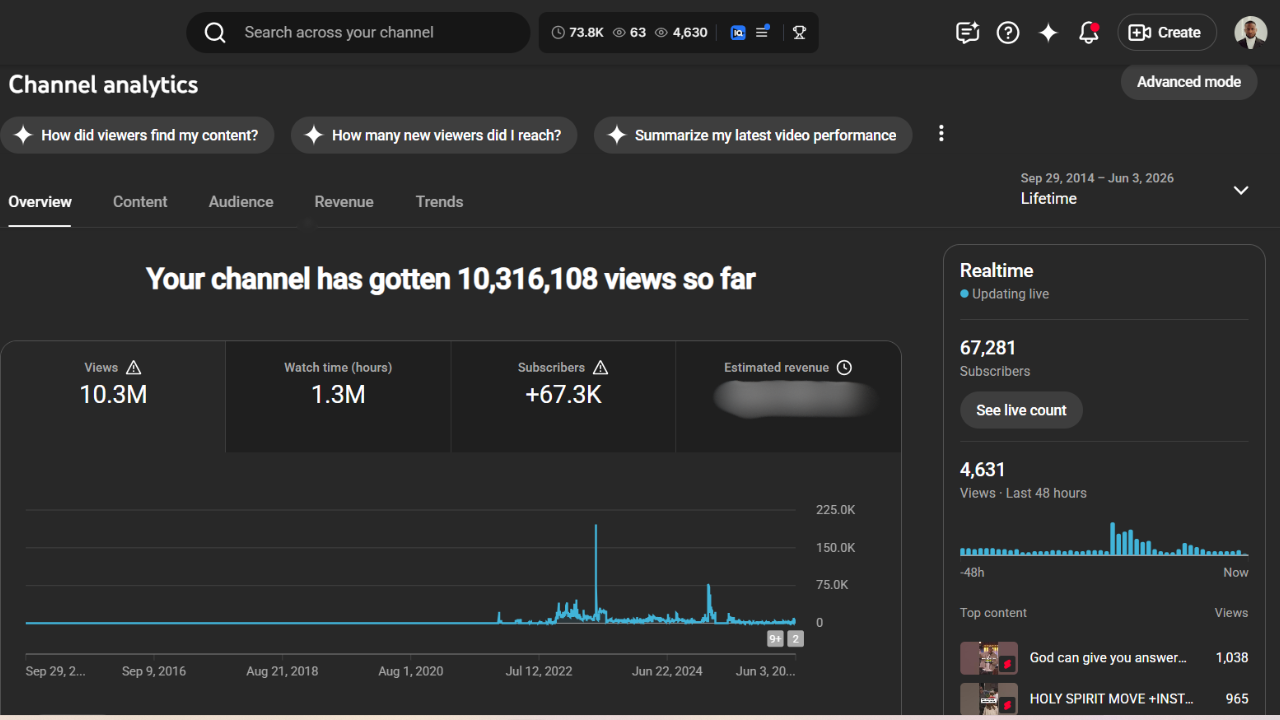
As Social Media Growth Marketer at Great Grace TV, I took the channel from 3,000 subscribers to 10.3M+ lifetime views, 67K+ subscribers and 1.3M watch hours.
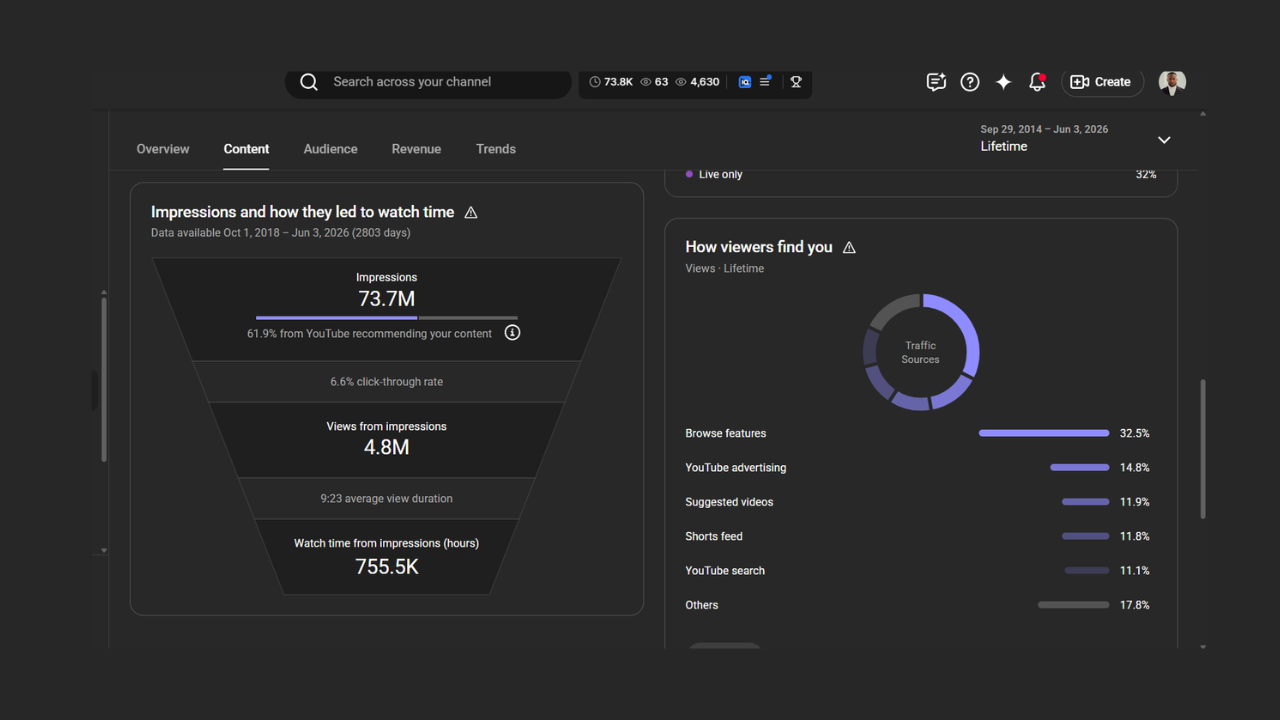
It was not luck. It was a funnel. 73.7M impressions (the number of times the channel was shown to people) became 4.8M views, which became 755.5K hours watched. Every stage was engineered: the thumbnail won the click, the hook held the view, and the content earned the return.
Growth is not only YouTube. At Ayoken, a Web3 NFT marketplace, I built the Discord and Telegram communities from scratch, grew Twitter by 50% and drove community led acquisition that contributed to a $1.4M preseed raise.
Want one of these for your agency?
Book a 30 minute intro call. We will look at where your team's hours go and which system would pay for itself first.