

Quick answer: Getting customers from YouTube is a system, not luck — attract the right viewers with buyer-intent content, qualify them inside the video, and give every viewer one clear next step. Most channels fail because nothing after the view is built to convert, not because views are too low. This guide covers the four-stage system (Attract, Qualify, Convert, Engine) used to turn a channel into a repeatable customer-acquisition engine.
Here’s the honest version of how to get customers from YouTube: views are not the goal. They never were. A video with 200,000 views and zero customers is not a win, it’s a hobby with good lighting. Customers are the goal, and getting them from YouTube is not luck, virality, or a bigger budget. It’s a system.
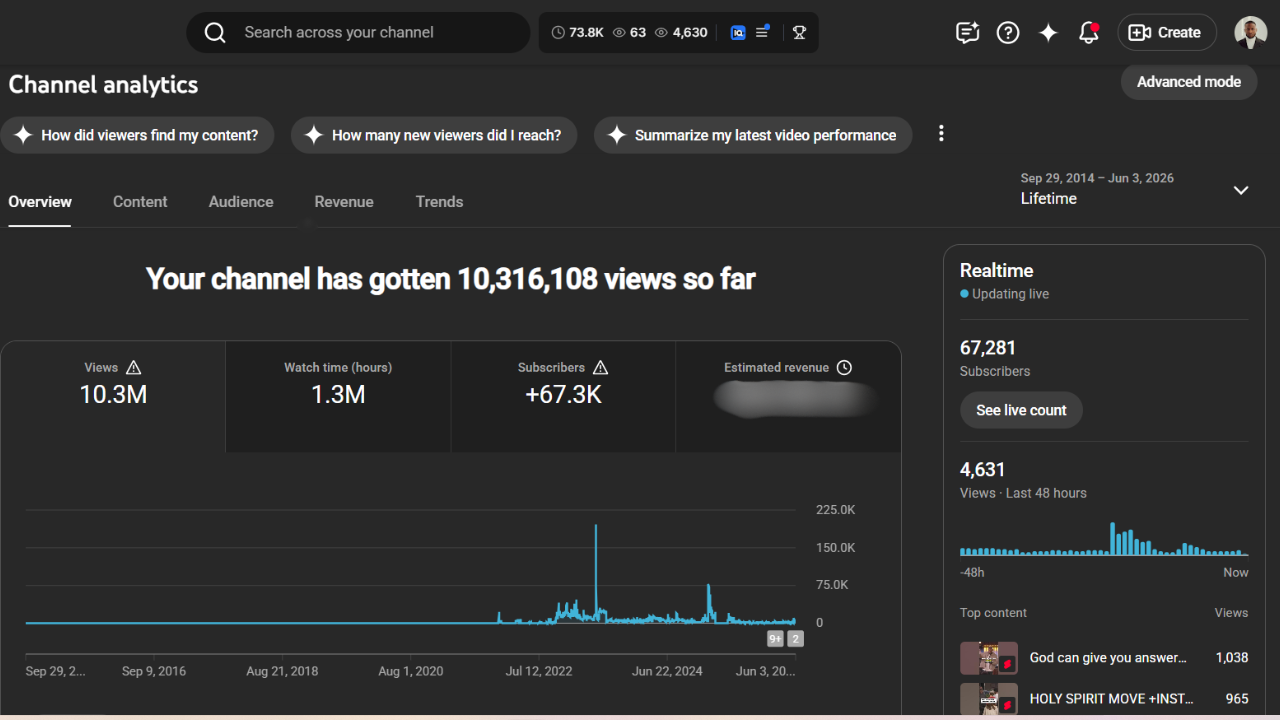
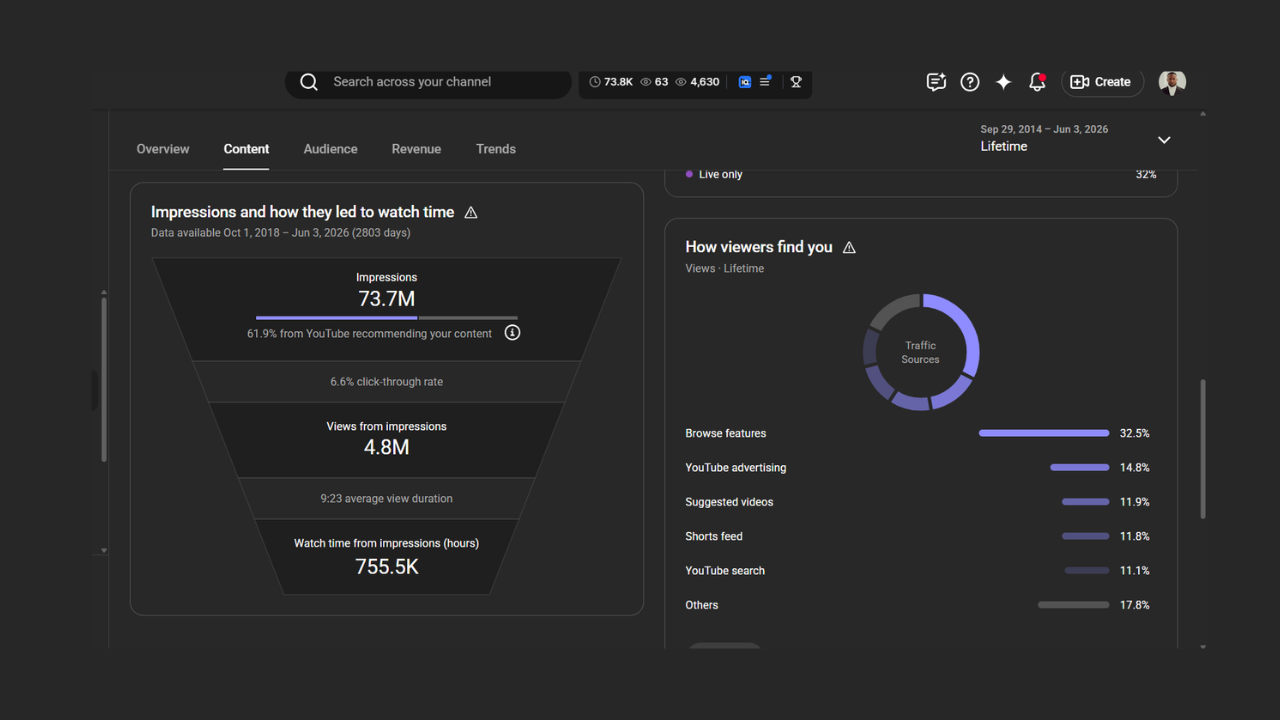
I’ve used that system to help channels post over 10M+ views, grow past 67K+ subscribers, and generate 73M+ impressions — and I’ve used the same underlying playbook to help a client raise $1.4M. None of that happened because a video “went viral.” It happened because every video was built to do a job, and every viewer had somewhere to go next.
This guide is for founders, coaches, consultants, and business owners who already have a product worth buying and are tired of posting into the void. If you’re chasing view counts for their own sake, this isn’t for you. If you want views that turn into booked calls and paying clients, keep reading — this is the complete arc, start to finish.
Why Most Businesses Get YouTube Wrong From Day One#
Most businesses treat YouTube like a content calendar. Post something, hope it performs, repeat. There’s no system underneath it, so nothing compounds. They’re making videos. They are not building an asset.
Here’s the distinction that changes everything: a video is content. A channel built around a buyer’s journey is an asset. Content gets consumed and forgotten. An asset keeps working for you at 2 a.m. while you sleep, the same way a well-placed billboard on a highway keeps getting seen long after the crew that built it went home. That’s the shift this guide is built around.
There are two things that separate businesses that get customers from YouTube and businesses that just get views: intent and infrastructure. Intent means you’re making videos that answer a question a buyer is actively searching, not just a topic you find interesting. Infrastructure means there’s an actual next step waiting for that viewer — a lead magnet, a description link, an email list, an offer — instead of a comment section and a “like and subscribe.”
Fix those two things and the “going viral” problem mostly disappears, because you stop needing virality. A video that reaches the right 500 people converts better than a video that reaches the wrong 500,000.
The AQCE System: The Framework Behind Every Step in This Guide#
Everything in this guide runs through one framework: Attract, Qualify, Convert, Engine — AQCE. Four stages, one system, and skipping any one of them is why most channels get views but no customers.
Attract#
This is where you bring the right people in — not the most people, the right people. Attraction is topic selection plus packaging: choosing subjects your actual buyers are searching for, then titling and framing the video so those specific people click. Attracting a broad audience feels good on a view counter and does nothing for your revenue. A video that pulls in 2,000 of exactly the right viewers will outperform one that pulls in 50,000 of the wrong ones, every time.
Qualify#
Not every viewer is a buyer, and pretending otherwise wastes everyone’s time. Qualifying means the video itself filters people — it names who this is for, describes the specific problem, and lets the wrong viewers self-select out before they ever reach your inbox. A well-qualified video does some of your sales team’s job before a single message is sent.
Convert#
This is the step most businesses skip entirely: giving the qualified viewer somewhere to go. A description link, a lead magnet, a booking page, an email opt-in — something concrete that turns “I watched your video” into “I gave you my contact information” or “I booked a call.” Without this step, Attract and Qualify were just an expensive way to make someone feel good about your brand for four minutes.
Engine#
The last stage is what makes this repeatable instead of a one-off campaign. An engine means the system runs on a cadence, gets measured, and improves — the same topics that worked once get built into a formula, the same CTA gets refined based on what actually converts, and new videos plug straight into an existing funnel instead of starting from zero every time. This is the difference between a channel that occasionally gets lucky and one that reliably produces customers month after month.
How Do You Attract the Right Viewers on YouTube?#
Attraction starts with a hard truth: your video’s topic matters more than your production quality. A well-lit video answering a question nobody is asking will lose every time to a phone-shot video answering a question your exact buyer typed into the search bar last week.
Search for the questions your ideal customer is actually typing — not what you assume they’re typing. Autocomplete and the “People also ask” boxes on Google and YouTube are free research. If you sell accounting software to small agencies, “how to invoice clients faster” beats “the future of fintech” every single time, because one of those is a buyer-intent search and the other is a spectator topic.
Once you know the topic, the title and thumbnail decide whether anyone clicks at all. This part deserves its own deep dive — see How to Choose YouTube Topics Customers Actually Search for the full framework on finding and validating buyer-intent topics before you script a single video. (Cluster article pending — link to be added once published; see the roadmap section below.)
How Do You Turn YouTube Viewers Into Actual Leads?#
This is the Qualify-into-Convert bridge, and it’s where most channels leave the most money on the table. A viewer who finishes your video isn’t a lead. A viewer who takes an action is.
The mechanics are simple to describe and easy to skip: tell the viewer exactly what to do next, make that action worth taking, and make it stupidly easy to take. That means a specific lead magnet tied to the specific video’s topic — not a generic “check the link below” that dumps every viewer onto your homepage regardless of what they just watched. Someone who watched a video on lead generation should land on something about lead generation, not your general newsletter signup.
This exact mechanic — turning views into booked calls for B2B specifically — is broken down in full in YouTube Lead Generation for B2B: From Views to Booked Calls, including where your call-to-action should actually go in the video and how long it realistically takes to see results.
How Often Should You Post to Get Customers Faster?#
More often than you’re posting now, almost certainly — but not for the reason most people think. Posting frequency doesn’t work because the algorithm “rewards activity.” It works because more buyer-intent videos means more chances to be the answer when your exact customer searches.
A widely cited dataset tracking over ten million channels found that channels publishing 12 or more times a month saw roughly four times the view growth of channels posting less than once a month. That gap isn’t about the algorithm liking active creators. It’s about math: more at-bats against buyer-intent searches means more hits.
That said, a posting schedule you can’t sustain past month two is worse than a slower one you keep for two years. One well-targeted, buyer-intent video a week, kept up consistently, will out-earn a frantic daily posting sprint that burns you out by spring. Consistency you can actually keep beats intensity you can’t.
Shorts or Long-Form: Which One Actually Gets You Customers?#
Wrong question, honestly — it’s not either/or. Shorts and long-form do different jobs in the same system, and treating them as competitors misses the point entirely.
Shorts are a discovery engine. Most of their views come from people who don’t already follow you, which makes them a cheap, fast way to get new eyes on your channel. But Shorts are a terrible place to qualify or convert someone — you have seconds, not minutes, and there’s no room to build the trust a buying decision needs.
Long-form is where qualification and conversion actually happen. It’s where you can name the problem in detail, show you understand it better than the viewer does, and walk them to a specific next step. Think of Shorts as the billboard on the highway and long-form as the actual sales conversation once someone walks into the store. You need both, and you need them doing different jobs, not competing for the same one.
What Should You Put in Your Description to Get Clicks?#
Your description is not a transcript dumping ground. Treat the first two lines as prime real estate, because that’s all most viewers see before “show more” — everything below that line only gets read by people who were already convinced by your video.
Put your single clearest next step in those first two lines: what you want the viewer to do, and why it’s worth doing right now. Buried links at the bottom of a 400-word description might as well not exist. If you want deeper detail on writing descriptions that actually get clicked instead of scrolled past, that’s covered start to finish in YouTube Description CTAs That Get Clicked — (cluster article pending, see roadmap below).
Why Do Some Channels Get Views But No Customers?#
Because Attract without Qualify and Convert is just entertainment. It’s the single most common failure mode in this entire process, and it’s rarely a content problem — it’s a systems problem.
A channel that racks up views but never converts usually has one of three gaps: the topics attract browsers instead of buyers, there’s no clear next step offered anywhere in the video, or the next step exists but isn’t tied closely enough to what the viewer just watched to feel relevant. Fixing the gap is almost never “make better videos.” It’s almost always “close the loop you already opened.” This exact failure pattern, and the fix for each version of it, gets the full breakdown in Why Your YouTube Channel Gets Views But No Customers — (cluster article pending, see roadmap below).
How Do You Build a Repeatable Customer Engine, Not Just One Good Video?#
One video that converts is a lucky break. A system where every new video plugs into an existing funnel is a business. The difference is the Engine stage of AQCE, and it’s built on three things: a topic bank of proven buyer-intent questions you can keep pulling from, a lead-capture mechanism that’s already built and tested, and a review cadence where you actually look at which videos convert and do more of that.
This is also where the “meta-story” gets interesting: this exact guide, and the site you’re reading it on, were built and grown using this same engine — attract through search-driven content, qualify with direct language about who it’s for, convert through a single clear offer, and let the whole thing run as infrastructure instead of a one-time push. If you want to see that build-in-public breakdown in detail, including the platform economics of selling a digital product through YouTube, that’s coming in Selling Digital Products Through YouTube — (cluster article pending, see roadmap below).
Does This Work Outside the US and Western Markets?#
Yes — and it’s underused precisely because most YouTube advice is written for a US audience by default, which leaves a lot of search demand completely unanswered elsewhere. I’m writing this from Lagos, Nigeria, and the same AQCE mechanics apply directly to African founders: buyer-intent search behavior doesn’t change by continent, and underserved keyword space is still underserved keyword space, wherever your audience is searching from.
If you’re building a business in Nigeria, Kenya, South Africa, or anywhere else that YouTube’s advice ecosystem tends to ignore, there’s a dedicated breakdown coming in YouTube Customer Acquisition for African Founders — (cluster article pending, see roadmap below), covering the specific angles that make this underserved space a genuine advantage rather than a disadvantage.
What Does This Look Like in Practice? (An Illustrative Walkthrough)#
Here’s an illustrative example — not a real client, just a composite to make the system concrete. [NEEDS REAL QUOTE/RESULT: swap this walkthrough for an actual guide-buyer or consult-client result once one exists.]
Say you run a small B2B SaaS company selling scheduling software to dental clinics. Instead of a generic “5 Tips for Running Your Practice” video, you make one titled “How to Stop Losing Patients to No-Shows (3 Fixes That Actually Work)” — a direct answer to a search a clinic owner is actually typing. That’s Attract.
Thirty seconds in, you name exactly who this is for: “If you’re running a clinic with more than a handful of chairs and no-shows are eating your schedule, this is for you.” That’s Qualify — the wrong viewers self-select out immediately, and the right ones lean in.
Two minutes later, you mention a free no-show-rate calculator, tied specifically to the problem in the video, with the link in the first two lines of the description. Someone downloads it and lands on a page that asks three questions about their current booking process. That’s Convert — a viewer became a named lead with a specific problem you now understand.
A week later, that same topic format gets reused for “How to Stop Losing Patients to Late Cancellations,” pulling from the same calculator, the same qualifying language, the same funnel. That’s Engine — the system runs again without being rebuilt from scratch.
Nothing about that example requires virality, a huge budget, or professional production. It requires knowing the buyer’s actual search, being blunt about who the video is for, and having somewhere for the right viewer to go.
What Should You Actually Measure to Know If This Is Working?#
Views and subscribers are vanity metrics for this purpose — track them if you like, but they won’t tell you if the system is working. Two numbers matter far more.
The first is impressions, position, and click-through rate per video, which Google Search Console will show you for any video that’s earning search traffic, and which YouTube’s own analytics show for on-platform search. This tells you whether your Attract stage is actually working — are the right searches finding you at all.
The second is the traffic-to-landing-page flow, visible in Google Analytics: how many people who watched actually clicked through to your lead magnet, offer, or booking page, and what they did once they got there. This tells you whether Qualify and Convert are doing their job, or whether you’re attracting the right viewers and then losing them at the handoff.
Judge the system at month six, not month two. Early cluster and topic-driven content typically shows its first real movement in 60 to 90 days and keeps compounding for six to twelve months after that — this is a channel you’re building, not a campaign you’re running, and judging it on week-three numbers will talk you out of the exact strategy that was about to start working.
The Full YouTube Customer-Acquisition Series#
This pillar page is the map. Each piece below goes deep on one part of the AQCE system. One is live now, the rest are being published on a steady cadence — bookmark this page and check back, or come back through this hub once you’ve read the one that’s live.
- YouTube Lead Generation for B2B: From Views to Booked Calls — live now
- Why Your YouTube Channel Gets Views But No Customers — pending
- YouTube Shorts vs Long-Form for Business: What Actually Converts — pending
- How Often Should You Post on YouTube (the real data behind the answer) — pending
- The YouTube Funnel for Founders: Video to Email to Sale — pending
- How to Choose YouTube Topics Customers Actually Search — pending
- YouTube Description CTAs That Get Clicked — pending
- Selling Digital Products Through YouTube (the build-in-public story) — pending
- YouTube Customer Acquisition for African Founders — pending
Where the Guide Comes In#
Everything above is the real system, given away in full — not a teaser. If you’ve read this far, you already have enough to go build an attract-qualify-convert-engine loop for your own channel.
Here’s what this post can’t do: walk you through your specific offer, hand you the worksheets to map your own funnel step by step, or give you the self-audit that shows you exactly where your current channel is leaking customers. That’s what Built the Product. Now Get Customers. is built for — the complete AQCE system in worksheet form, so you’re not rebuilding this framework from a blog post, you’re applying it directly to your business this week.
Frequently Asked Questions#
How long does it take to get customers from YouTube?#
Most founders following a consistent, buyer-intent posting cadence start seeing real leads within 3 to 4 months, with results compounding well beyond that. Unlike paid ads or a single viral post, a YouTube video keeps generating leads for a year or more after it’s published — it’s slower to start and far more durable once it’s working.
Do I need a huge subscriber count to get customers from YouTube?#
No. Subscriber count and customer count are only loosely related. A channel with a few thousand highly qualified subscribers in a specific niche will out-convert a much larger, broader channel every time, because conversion depends on how well-matched your viewers are to your offer, not how many of them there are.
What’s the biggest mistake businesses make trying to get customers from YouTube?#
Treating views as the finish line. Most businesses stop measuring the moment someone watches the video, when the actual work — qualifying that viewer and giving them a next step — hasn’t even started yet. Fix that one gap and most of the “YouTube doesn’t work for my business” problem disappears.
Can YouTube really generate B2B leads, or is it only good for consumer brands?#
YouTube works well for B2B specifically because buyer-intent searches (“how to fix X problem,” “best tool for Y”) are just as common in B2B as they are in consumer markets — arguably more so, since B2B buyers research heavily before ever talking to a salesperson. A well-targeted B2B channel can generate qualified leads without any paid ad spend at all.
Do I need to go viral to get customers from YouTube?#
No, and chasing virality usually works against you. A video that reaches a huge, broad audience often converts worse than one that reaches a small, precisely targeted one, because virality optimizes for reach, not relevance. Aim for the right viewers, not the most viewers.